Giant Squid (Architeuthis dux)
Maximum size at 13 meters (43 ft) for females and 10 meters (33 ft) for males
Giant squid are very widespread, occurring in all of the world's oceans
The inside surfaces of the arms and tentacles are lined with hundreds of sub-spherical suction cups, 2 to 5 centimeters (0.79 to 2.0 in) in diameter, each mounted on a stalk
They contain dark ink used to deter predators
Giant squid feed on deep-sea fish and other squid species. They catch prey using the two tentacles, gripping it with serrated sucker rings on the ends
http://images.nationalgeographic.com/wpf/media-live/photos/000/005/cache/giant-squid_544_600x450.jpg
Dumbo Octopus (
Living at extreme depths of 3,000 to 4,000 meters (9,800 to 13,000 ft), with some living up to 7,000 meters (23,000 ft) below sea level, which is the deepest of any known octopus.
They can flush the transparent layer of their skin at will, and are pelagic animals, as with all other cirrate octopuses
The largest Dumbo octopus ever recorded was 6 feet (1.8 m) in length and weighed 13 pounds (5.9 kg), although the normal size for the various species is thought to be smaller.
It is the only octopus that swallows its prey whole
They move by pulsing their arms, shooting water through their funnel, by waving their ear-like fins, or any combination thereof
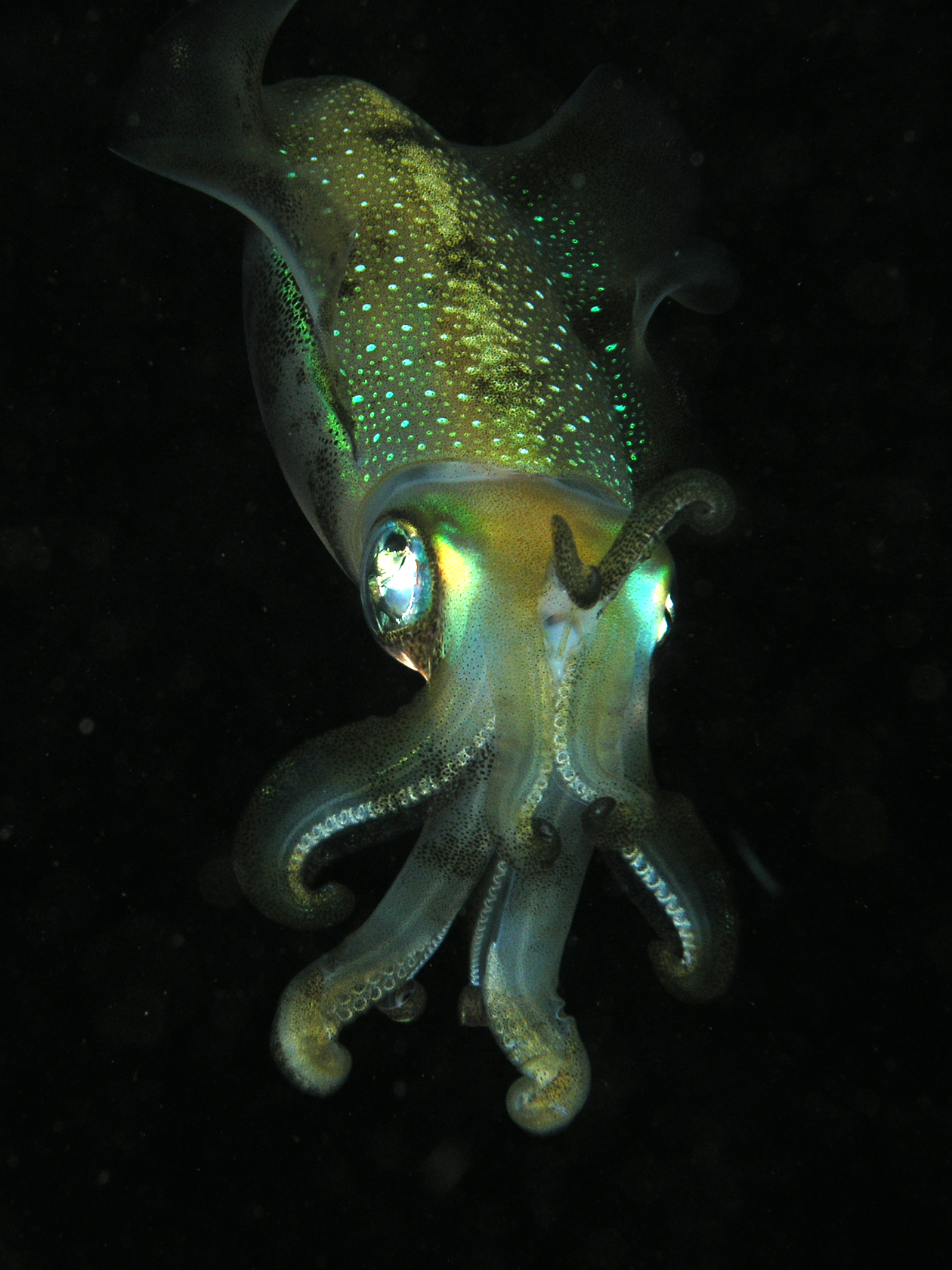
Bigfin reef squid (
They are small to medium-sized squids, averaging 3.8 to 33 centimeters (1.5 to 13 in) in length
They are usually found 0 to 100 m (0 to 330 ft) below the water's surface
Bigfin reef squids exhibit strong positive phototactic behavior (attraction to light) and will move readily within a certain distance of a light source
Bigfin reef squids are one of the most commercially important squid species
Bigfin reef squids serve as hosts to the copepod ectoparasite Doridicola similis and the worm-like dicyemid endoparasites Dicyema koshidai and Dicyema orientale


No comments:
Post a Comment